
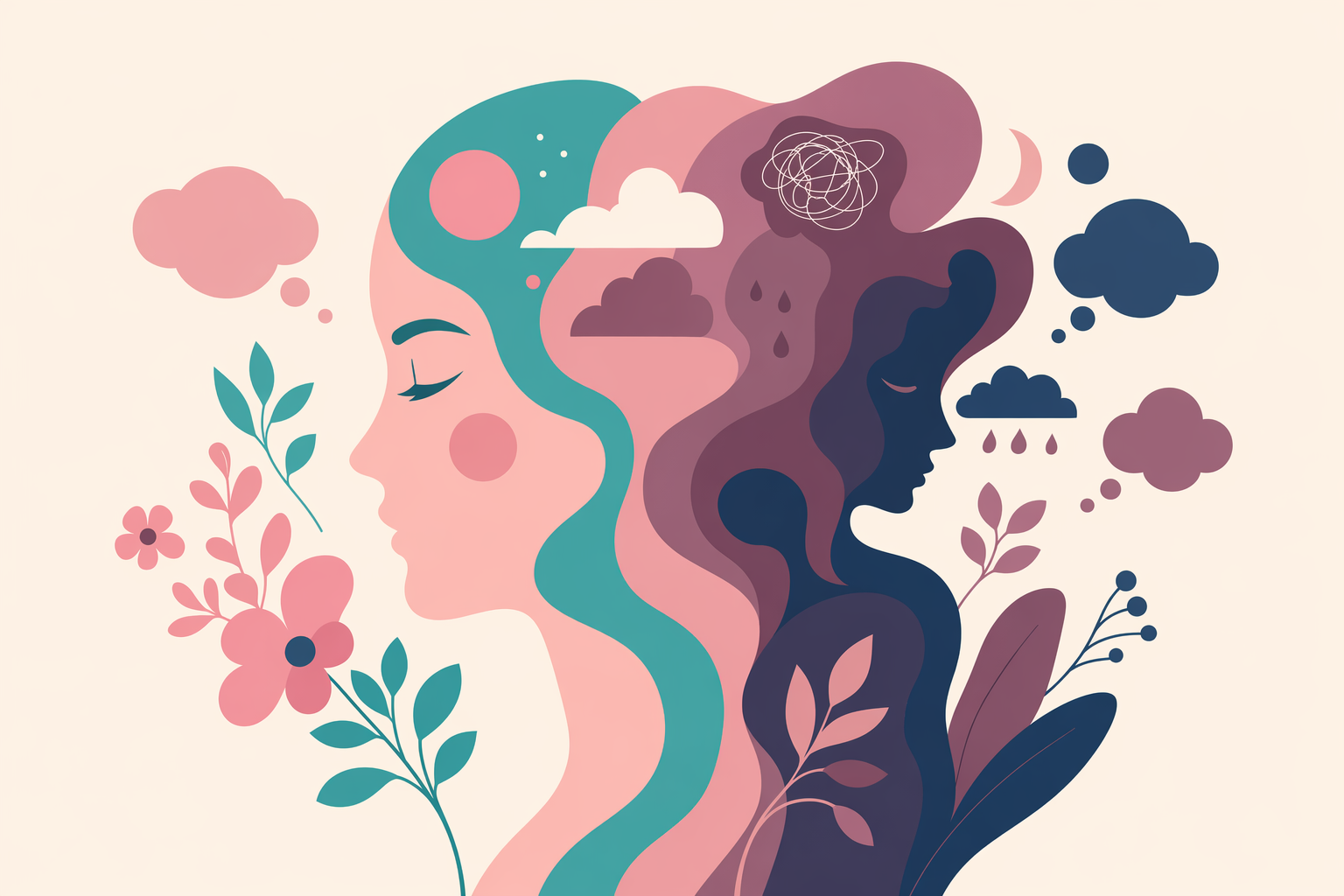
If you feel confident and optimistic one week, then irritable or anxious the next, your menstrual cycle may be a major factor. These shifts are hormonally mediated and biologically real. Tracking can often make the pattern easier to predict.
The pattern can look different in each phase of the cycle.
The hormonal basis of mood changes
The two primary ovarian hormones, estrogen and progesterone, both have direct effects on brain chemistry:
Estrogen influences:
- Serotonin: estrogen upregulates serotonin synthesis and receptor density. Higher estrogen generally means more serotonin availability, which is associated with better mood, sleep, and impulse control
- Dopamine: estrogen modulates dopamine pathways that affect motivation, reward sensitivity, and pleasure
- BDNF (brain-derived neurotrophic factor): estrogen promotes neuroplasticity and cognitive function
Progesterone (via its metabolite allopregnanolone) influences:
- GABA, the brain's primary inhibitory neurotransmitter. Progesterone enhances GABA activity, producing sedative and calming effects
- The withdrawal effect. When progesterone drops rapidly before menstruation, the sudden loss of GABA enhancement can produce anxiety, irritability, and mood instability
These are the same neurotransmitter systems targeted by antidepressants (serotonin) and anti-anxiety medications (GABA).
Mood patterns by cycle phase
Menstrual phase (days 1–5)
Hormonal state: Both estrogen and progesterone are low.
Typical mood: Late-luteal anxiety and irritability often resolve within the first 1–2 days of menstruation as progesterone withdrawal completes. Many people report relief, clarity, or an emotional reset once their period starts, even if they still feel physically fatigued.
For others, low estrogen during menstruation means mood stays flat or slightly low until estrogen begins to rise.
Follicular phase (days 6–13)
Hormonal state: Estrogen is steadily rising. There is no significant progesterone.
Typical mood: This is when most people feel their best. Estrogen-driven increases in serotonin and dopamine contribute to:
- Higher energy and motivation
- Greater optimism and confidence
- Better verbal fluency and social engagement
- Improved stress resilience
- Enhanced cognitive function
The late follicular phase, approaching ovulation, is often described as the "peak" of the cycle because the hormonal environment most supports extroversion, productivity, and emotional stability.
Ovulatory phase (days 14–16)
Hormonal state: Estrogen peaks. LH surges. Testosterone also spikes briefly.
Typical mood: Energy and confidence often peak here. The brief testosterone surge may contribute to increased assertiveness and libido. Some people describe feeling most "themselves" around ovulation.
Luteal phase (days 17–28)
Hormonal state: Progesterone rises and dominates. Estrogen has a secondary rise, then falls.
Typical mood: The luteal phase has two distinct halves:
Early luteal (days 17–21): Progesterone's GABA-enhancing effects can produce a calm, slightly inward-turning mood. Some people feel more contemplative, need more time alone, or prefer lower-stimulation activities. The change is not necessarily negative; it may simply be a shift in baseline.
Late luteal (days 22–28): As both progesterone and estrogen fall sharply, mood symptoms can intensify:
- Irritability is the most commonly reported premenstrual mood symptom
- Anxiety can be driven by GABA withdrawal
- Emotional reactivity can make things that would not normally bother you feel disproportionately upsetting
- Low mood is related to falling serotonin availability
- Brain fog can involve reduced cognitive flexibility and working memory
How common are mood changes?
- ~80% of menstruating people experience some premenstrual mood or physical symptoms
- ~20–40% experience symptoms significant enough to be classified as PMS (premenstrual syndrome)
- ~3–8% experience PMDD (premenstrual dysphoric disorder), where mood symptoms are severe enough to impair daily functioning
The distinction between normal mood fluctuation, PMS, and PMDD depends mainly on severity and functional impact, rather than the type of symptoms.
Tracking mood across your cycle
Looking back and trying to remember your mood is unreliable for cycle-related symptoms. Daily tracking over at least 2–3 cycles is the only way to identify genuine patterns.
What to track:
- Mood (simple scale: 1–5 or descriptive tags)
- Anxiety level
- Irritability
- Cycle day (so mood data maps to cycle phases)
After 2–3 cycles of tracking, you may begin to see:
- Which specific days are your "worst" for mood
- Whether your mood changes fit normal fluctuation, PMS, or PMDD criteria
- Whether interventions (exercise, sleep changes, supplements) are making a measurable difference
What helps
Options with supporting evidence include:
- Aerobic exercise is one of the most consistently supported interventions for premenstrual mood symptoms
- Poor sleep amplifies every mood symptom, so protecting sleep in the luteal phase is especially important
- Calcium (1,200mg/day) significantly reduced mood and physical PMS symptoms in a randomized trial
- SSRIs, or serotonergic antidepressants, are the first-line treatment for PMDD and can be taken either daily or only during the luteal phase
- Recognizing "this is my day 25 brain, not reality" can create some psychological distance from the mood state
Making sense of the pattern
Hormonal and neurochemical changes can shape mood across the menstrual cycle. The pattern and its intensity vary, but consistent tracking can make your own changes more predictable. These shifts are a measurable physiological phenomenon, not a character flaw or a failure of emotional regulation. Understanding your pattern can help you decide how to manage it.
References
- Romans SE, et al. Mood and the menstrual cycle: a review of prospective data studies. Gender Medicine. 2012;9(5):361-384.
- Barth C, Villringer A, Sacher J. Sex hormones affect neurotransmitters and shape the adult female brain during hormonal transition periods. Frontiers in Neuroscience. 2015;9:37.
- Hantsoo L, Epperson CN. Premenstrual dysphoric disorder: epidemiology and treatment. Current Psychiatry Reports. 2015;17(11):87.
- Sundström Poromaa I, Gingnell M. Menstrual cycle influence on cognitive function and emotion processing. Molecular Psychiatry. 2014;19(2):137-143.
- Roney JR, Simmons ZL. Hormonal predictors of sexual motivation in natural menstrual cycles. Hormones and Behavior. 2013;63(4):636-645.
- Andréen L, et al. Progesterone effects during sequential hormone replacement therapy. European Journal of Endocrinology. 2006;154(1):141-149.
- Hampson E. Variations in sex-related cognitive abilities across the menstrual cycle. Brain and Cognition. 1990;14(1):26-43.
- Yonkers KA, O'Brien PM, Eriksson E. Premenstrual syndrome. The Lancet. 2008;371(9619):1200-1210.
- Parlee MB. The perceptual-motor correlates of menstrual cycle phase. Psychoneuroendocrinology. 1983;8(1):29-40.
- Daley A. Exercise and premenstrual symptomatology: a comprehensive review. Journal of Women's Health. 2009;18(6):895-899.
- Thys-Jacobs S, et al. Calcium carbonate and the premenstrual syndrome: effects on premenstrual and menstrual symptoms. American Journal of Obstetrics and Gynecology. 1998;179(2):444-452.
- Marjoribanks J, et al. Selective serotonin reuptake inhibitors for premenstrual syndrome. Cochrane Database of Systematic Reviews. 2013;(6):CD001396.